
What’s Beneath the Surface
Is Everything
Most people buy a tree and never think twice about its roots. We think about almost nothing else.
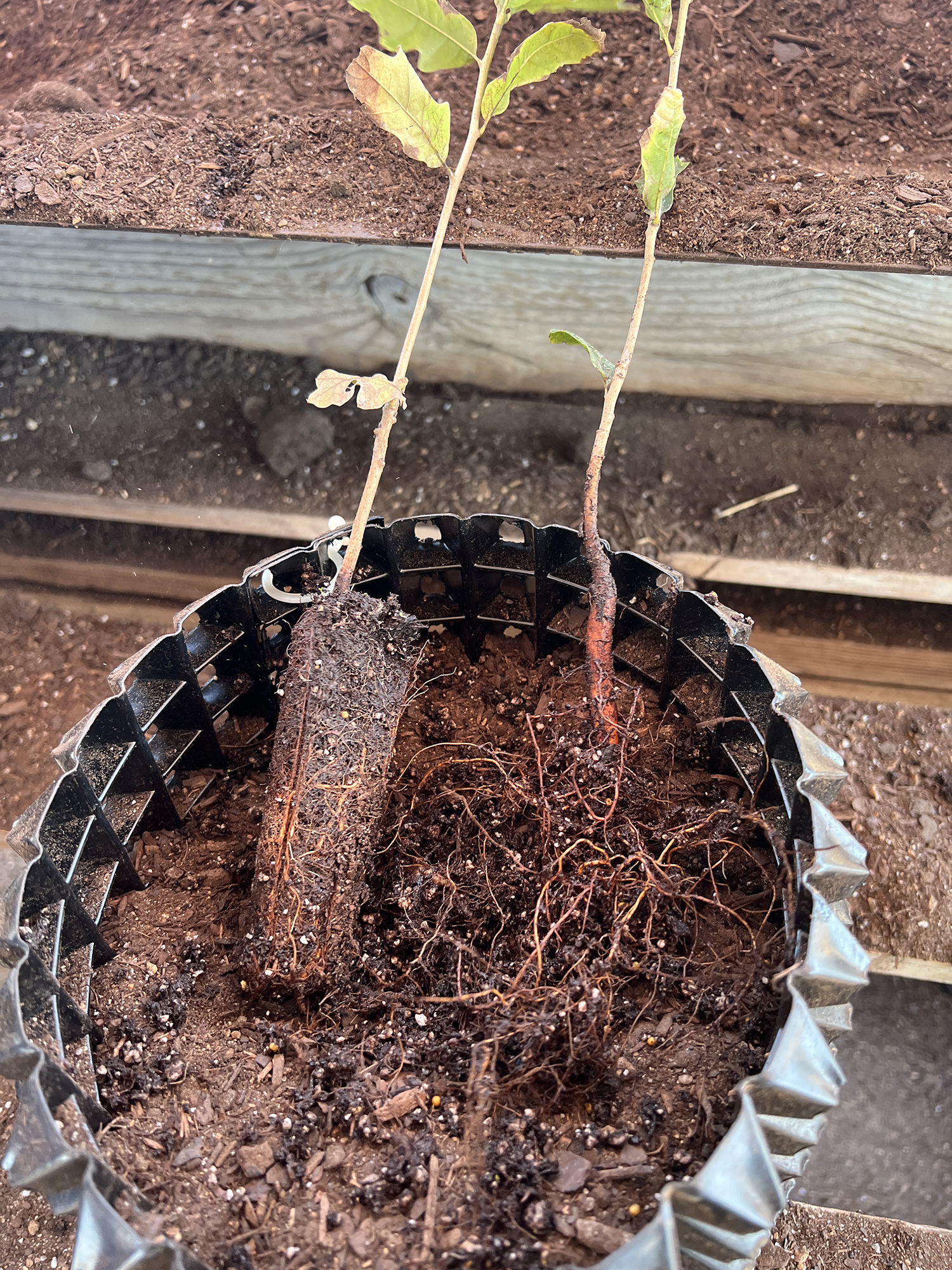
Most of us in the industry have seen it: trees that look great on installation day and start declining two years later. Circling roots, leaning trunks, buried flares. The problems were there from the start, just not visible yet. We spent years as arborists watching that pattern before we decided to do something about it. This farm is the result.
We’ve spent years thinking about how to grow trees differently. Not just prettier, or faster, or bigger, but structurally better. And it all starts underground.
A tree with bad roots is a liability. A tree with great roots is an investment.
It all comes down to roots
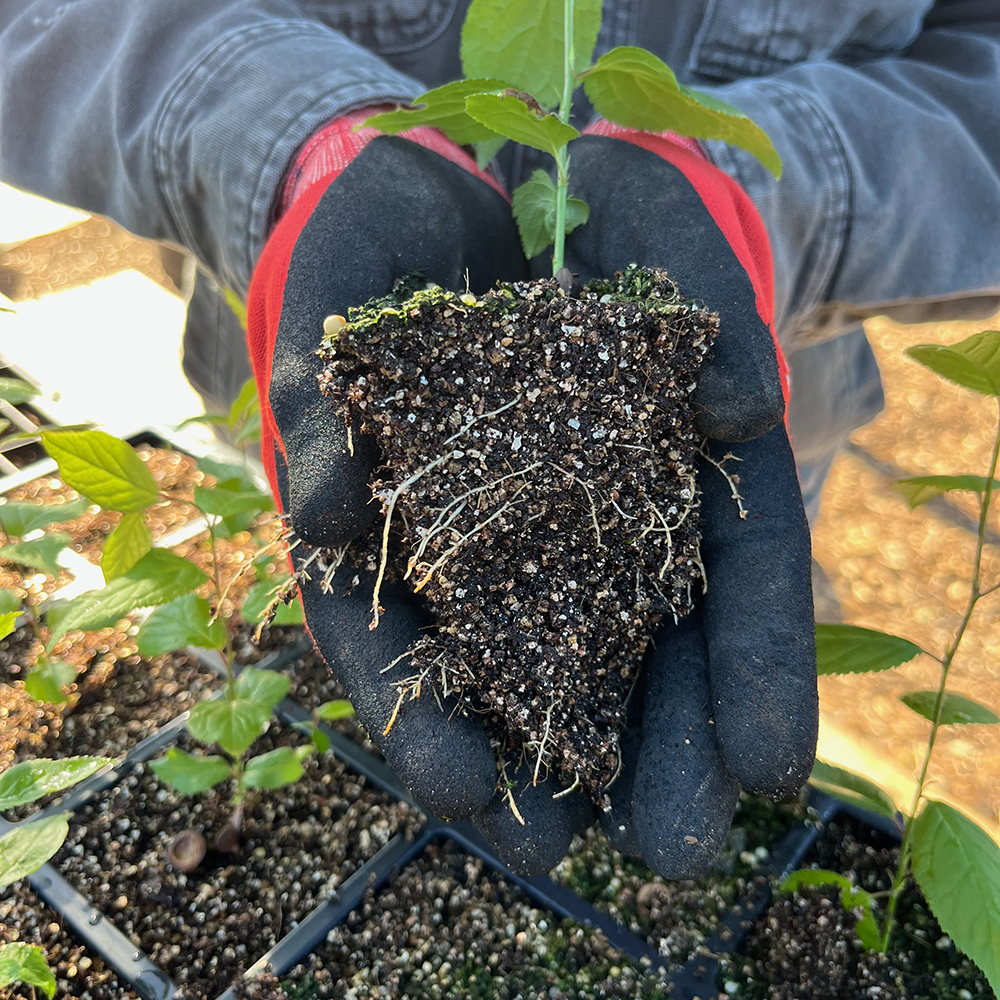
From the moment a seedling emerges, we’re already thinking about its root architecture. Our germination beds are air-pruned, meaning the moment a root tip reaches the edge of the bed, it hits air and stops elongating. Rather than circling or wrapping, it dies back and the plant responds by branching: sending out more lateral roots, more fibrous roots, more of the fine network that will eventually anchor the tree and take up water and nutrients efficiently.
This matters enormously. Most root problems in landscape trees are set at the nursery, not after planting. If a young tree spends its first months with circling roots in a standard container, that architecture is already encoded. It doesn’t fix itself.
Standing on their own
We minimize the use of stakes. This is counterintuitive to most buyers, shouldn’t a nursery want their trees to look perfectly straight? Sure. But a tree that grows without a stake develops something called taper: the trunk thickens at the base relative to the top, distributing the mechanical stress of wind and movement the way a healthy tree in nature would.
A staked tree never develops that taper. It grows tall and spindly because it never had to support itself. Remove the stake and it leans. Leave the stake on too long and the ties can damage or girdle the trunk. We’d rather grow a tree that doesn’t need one.
Repotting with intention
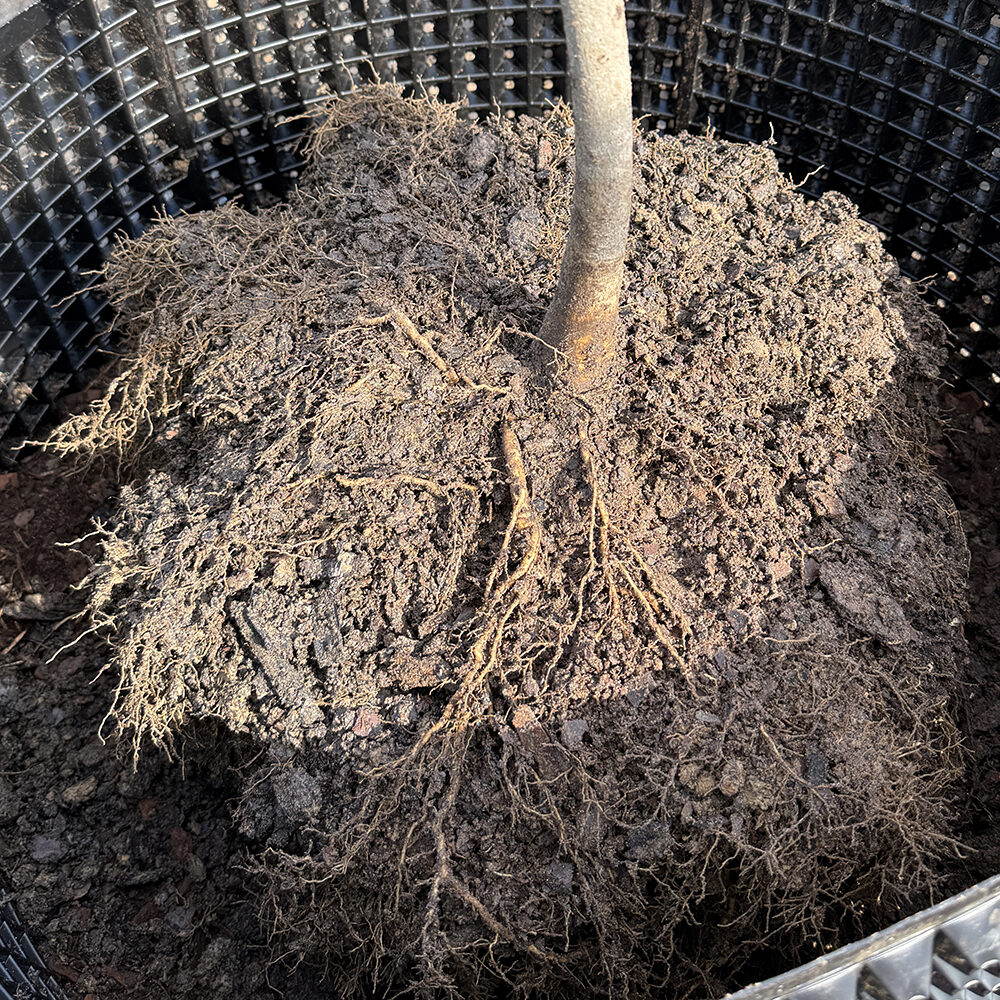
Every time we move a tree to a larger container, we’re careful about grade, which is the height the tree sits in the pot. Potting a tree too deep is one of the most common and damaging mistakes in the nursery industry. When the root flare (the widening at the base of the trunk where the roots spread out) is buried under inches of soil, girdling roots form, oxygen exchange is restricted, and the tree slowly declines.
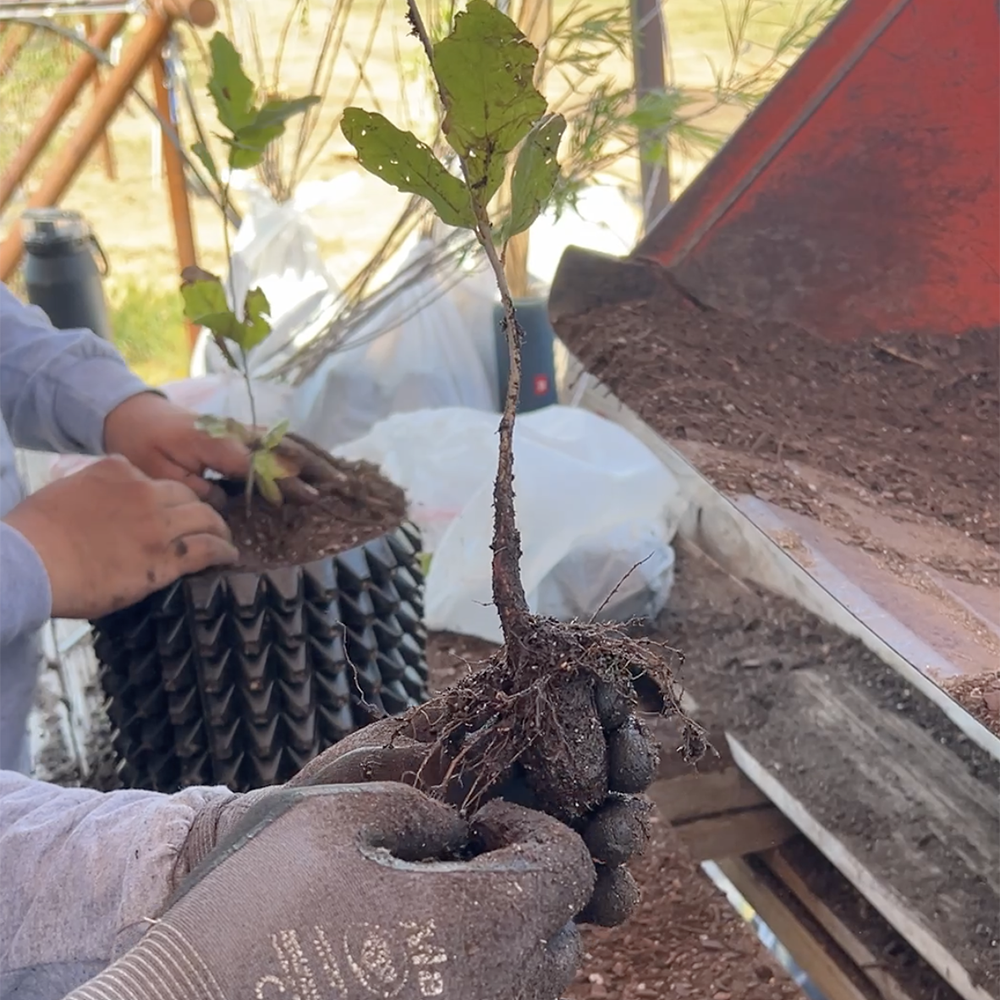
We keep the root flare visible. We maintain grade at repotting. We treat every container transition as an opportunity to inspect and correct the root system. Our focus is healthy, good quality roots, not just to get the tree into a bigger pot as fast as possible.
How we grow
Every decision we make, from germination through the final container, is built around getting the root ball right.
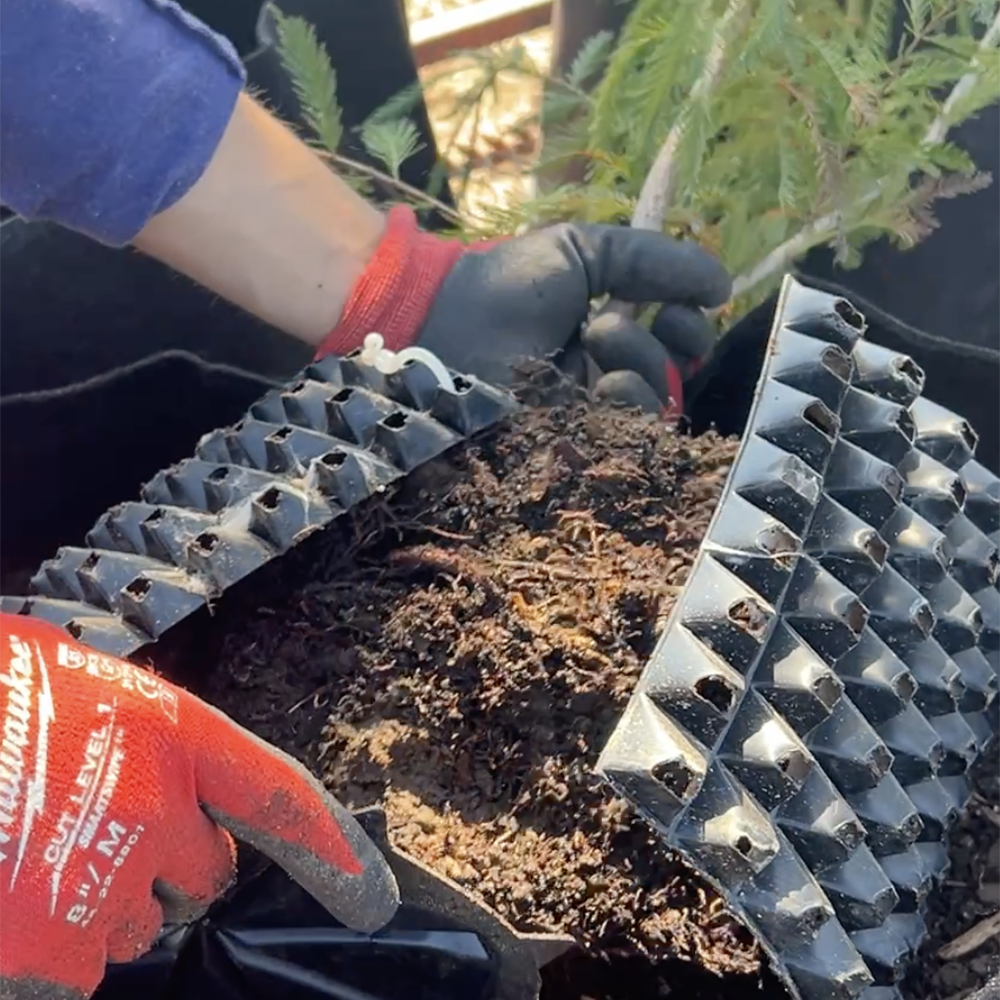
We continue air pruning through every stage of production using specially designed containers that are engineered to encourage exactly the kind of branching, fibrous root systems we’re after. The principle is the same at every size: expose root tips to air, trigger lateral branching, grow a dense and vigorous root ball rather than a few thick, wandering roots.
The difference when you unpot one of our trees versus a conventionally grown one is immediately visible. Ours look like a thick, even ball of roots. Conventional containers often reveal a sparse network with one or two thick roots circling the edge that look nice above the surface, but can be dangerous in the ground.
1.
Air-pruned germination
From the moment a seedling emerges, roots are directed to branch rather than circle, building the dense, fibrous network that anchors a tree and takes up water efficiently.
2.
Grow pots that work
We use purpose-built air-pruning containers, including RootMaker™ brand pots, at every stage of production. The result is a dense, fibrous root ball that establishes quickly and performs well under stress.
3.
Natural taper
A staked tree doesn’t develop the base strength that matters. We minimize staking so our trees develop natural taper and arrive with structural integrity already built in.
4.
Root flare at grade
Burying the root flare is one of the most common nursery mistakes. We keep it visible at every repot with no buried crowns and no girdling roots, setting the tree up for long-term success.
Why it matters
A tree with a healthy root system establishes faster, handles drought better, and holds up structurally over time. It looks good five years after planting, not just on installation day.
This kind of attention takes more time and costs more to do right. We think that’s exactly what professionals who care about their work are looking for.
Ready to spec great trees?
Our availability list reflects current inventory. If you’re planning a project and want to talk through what we have growing or what we can grow for you, give us a call.